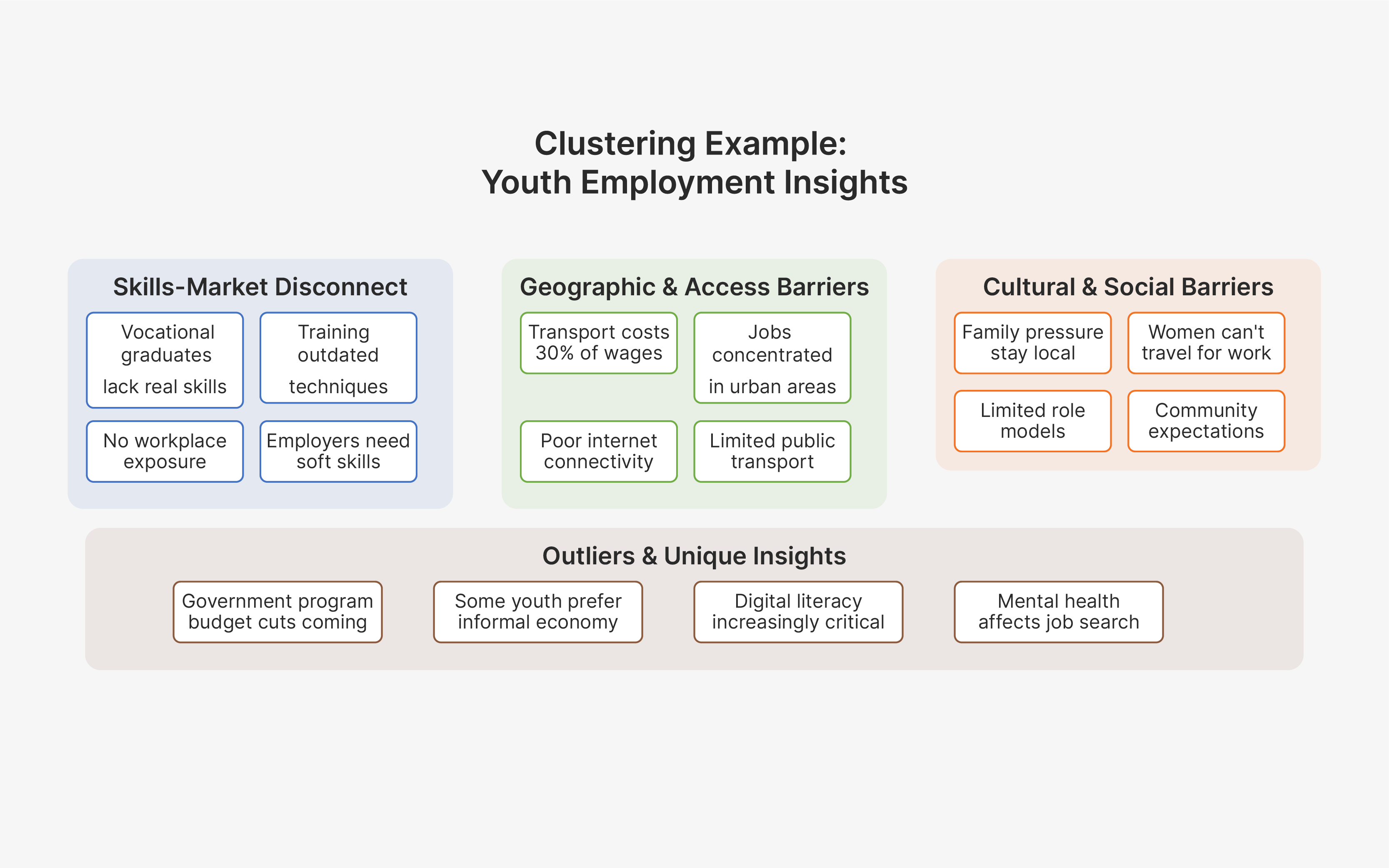
Affinity mapping only works if you let the data speak. The common mistake is naming themes too early. When you force a story, you lose nuance and misread the evidence.
I use this approach in my own project design work, and it helps teams stay aligned as the project evolves.
Try this 3 step practice the next time you cluster notes.
1) Silence first
Move notes into clusters without talking. This keeps groupthink low and allows patterns to emerge.
2) Do not name yet
Let clusters sit before you label them. If you name too early, you pull unrelated notes into a tidy but false category.
3) Look for outliers
If a note does not fit, leave it alone. Outliers often point to a blind spot or a new insight.
Two warning signs you are forcing the story: every cluster sounds like your original assumption, or every cluster has the same number of notes. If that happens, shuffle and regroup.
Try this: take one cluster and ask, "What would make this cluster false?" If you can name an exception, capture it as a separate note. That exception is often where the real insight lives.
In Lesson 3 🎥, I walk through this inside the Setup toolkit. Watch the lesson video to learn more.
Another tip: duplicate notes are allowed. If the same idea appears in multiple clusters, keep both copies. It shows the idea is connected across themes and should not be forced into one box. After clustering, take a photo and leave it overnight. Fresh eyes often catch misgrouped notes.
Timebox the clustering. Speed keeps the team from overthinking and encourages pattern recognition.