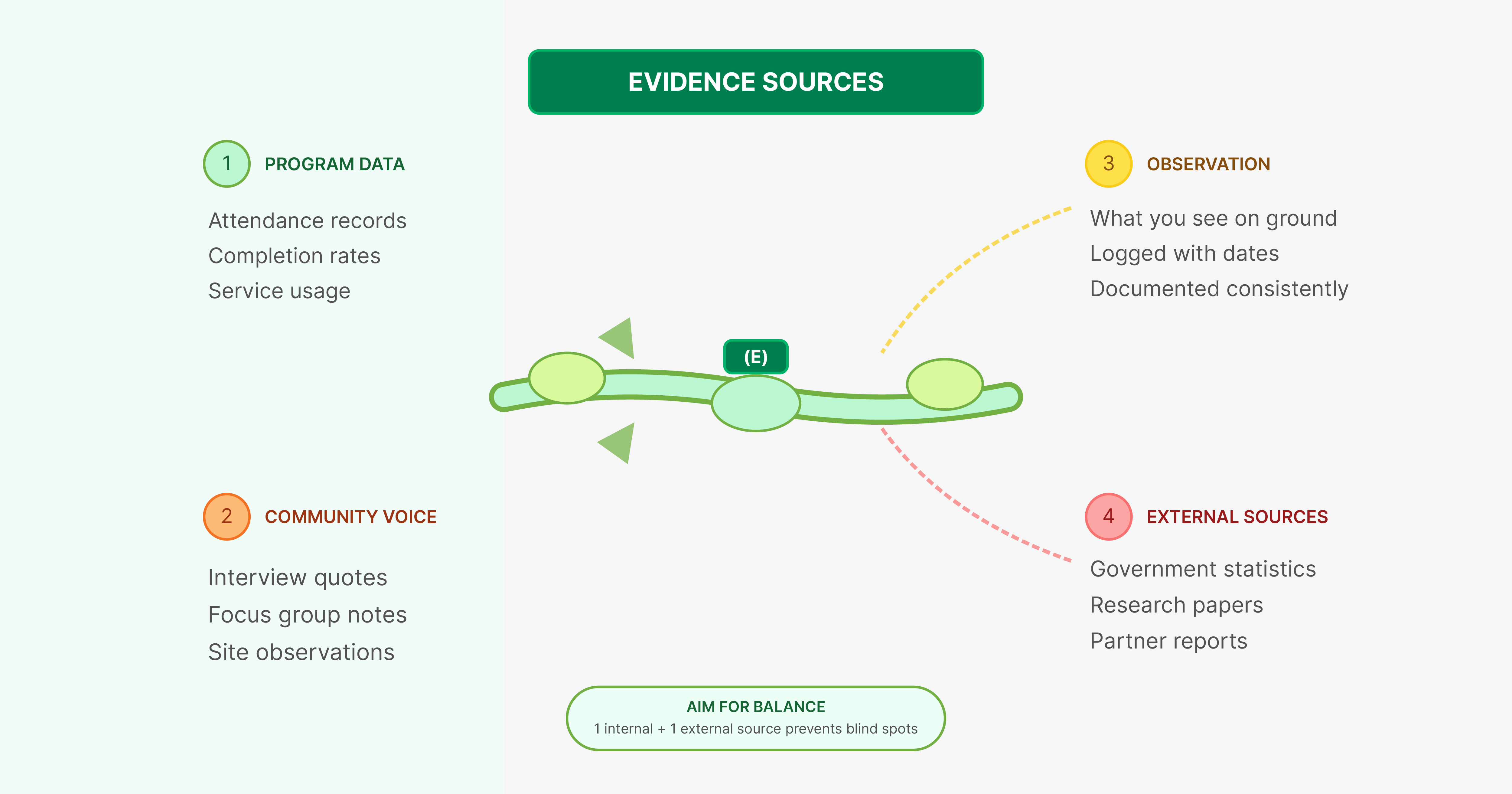
A strong problem statement is not just confident language. It is evidence you can point to. The easiest way to improve your Problem Tree is to tag each branch with a source. It makes your logic visible and reduces bias.
I use this approach in my own project design work, and it helps stay aligned as the project evolves.
Here is a simple evidence checklist you can use.
Program data.
- Attendance, completion, service usage, or wait list records
- Even a small dataset can show a pattern over time
Community voice.
- Quotes from interviews or focus groups
- Notes from site visits or informal conversations
Observation.
- What you see on the ground, logged with dates
- This is valid evidence when it is documented
External sources.
- Government statistics, research papers, or partner reports
- Use one or two strong sources rather than a long list
When evidence is thin, do not hide it. Label the branch as "assumption" and plan how you will test it. That is more credible than pretending the data exists.
Quick audit: pick one branch of your tree and list two sources. If you only have internal notes, add one external source you can pull in the next two weeks. That small change will strengthen every later step.
In 🎥 Lesson 1: Problem Tree, I walk through this inside the Setup toolkit. Watch the lesson video to learn more.
Aim for at least one internal source and one external source per branch. That mix keeps the story balanced and prevents blind spots. If you only have anecdotal evidence, add a short plan to gather more data.