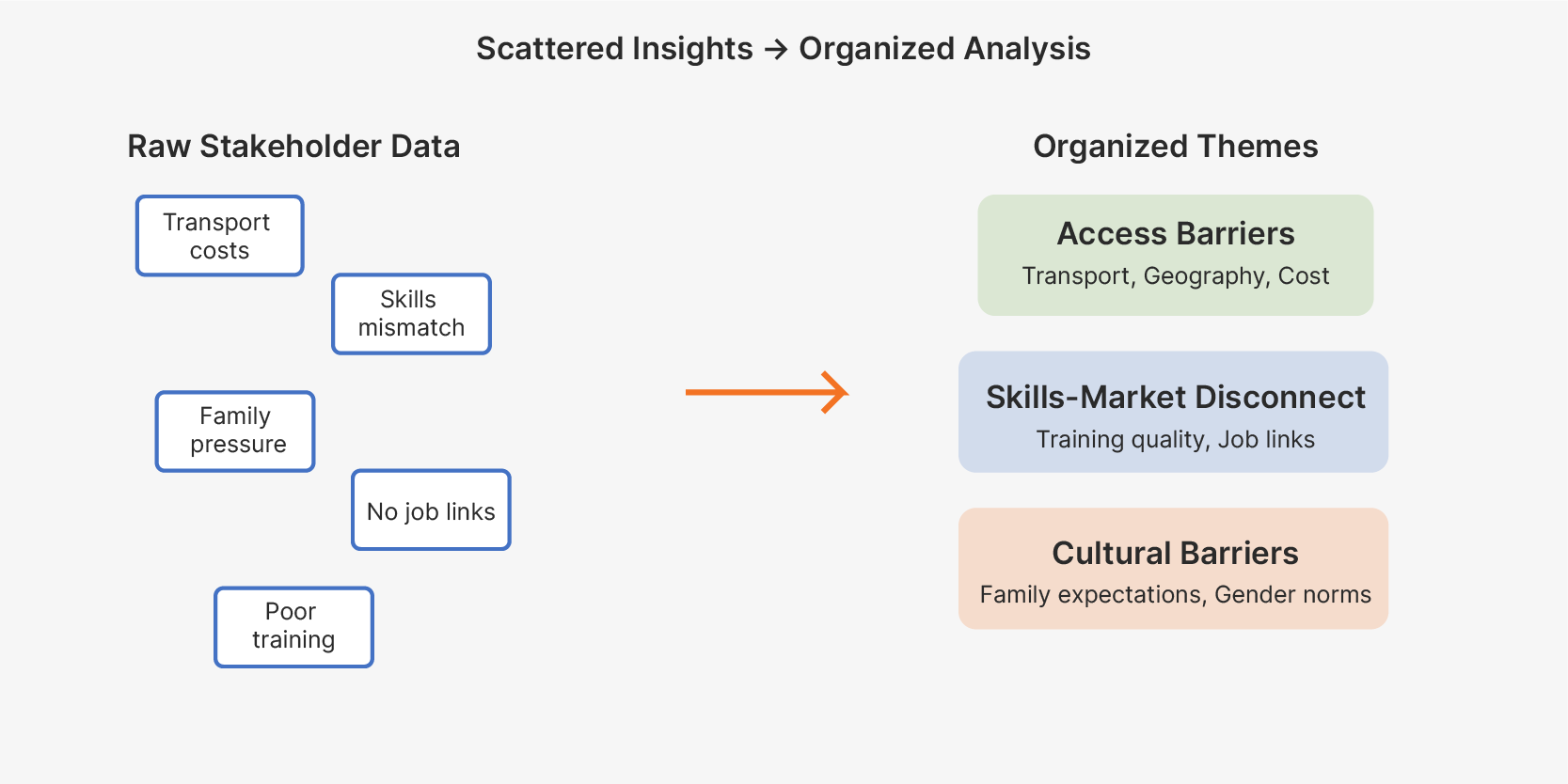
A good theme name is short, clear, and actionable. A weak theme name is academic or vague. The difference matters because your team will make decisions based on those labels.
I use this approach in my own project design work, and it helps teams stay aligned as the project evolves.
Here is a quick test.
Weak theme names
- Lack of capacity
- Limited resources
- Systemic barriers
These are not wrong, but they are too broad. They do not tell you what to do next.
Stronger theme names
- Training is scheduled when staff are off duty
- Data is collected but never shared back
- Community trust drops after short term pilots
These are specific and point to a design move.
Use a simple naming formula: Cause + Context + Effect. Example: "Delayed approvals due to unclear ownership." This tells the team where to focus.
Try this: rewrite three theme names using a verb. Then test them with a colleague. If the colleague can suggest a design action in one sentence, the label is working.
In Lesson 3 🎥, I walk through this inside the Setup toolkit. Watch the lesson video to learn more.
If you are stuck, pull a direct quote and turn it into a theme. Participant language keeps you close to the real story. Then add a short decision line: "So we will..." If the decision line is vague, your theme name is too broad. Tighten it until the action is clear.
A useful test is to read the theme names aloud. If they sound like a headline, they are probably clear enough.