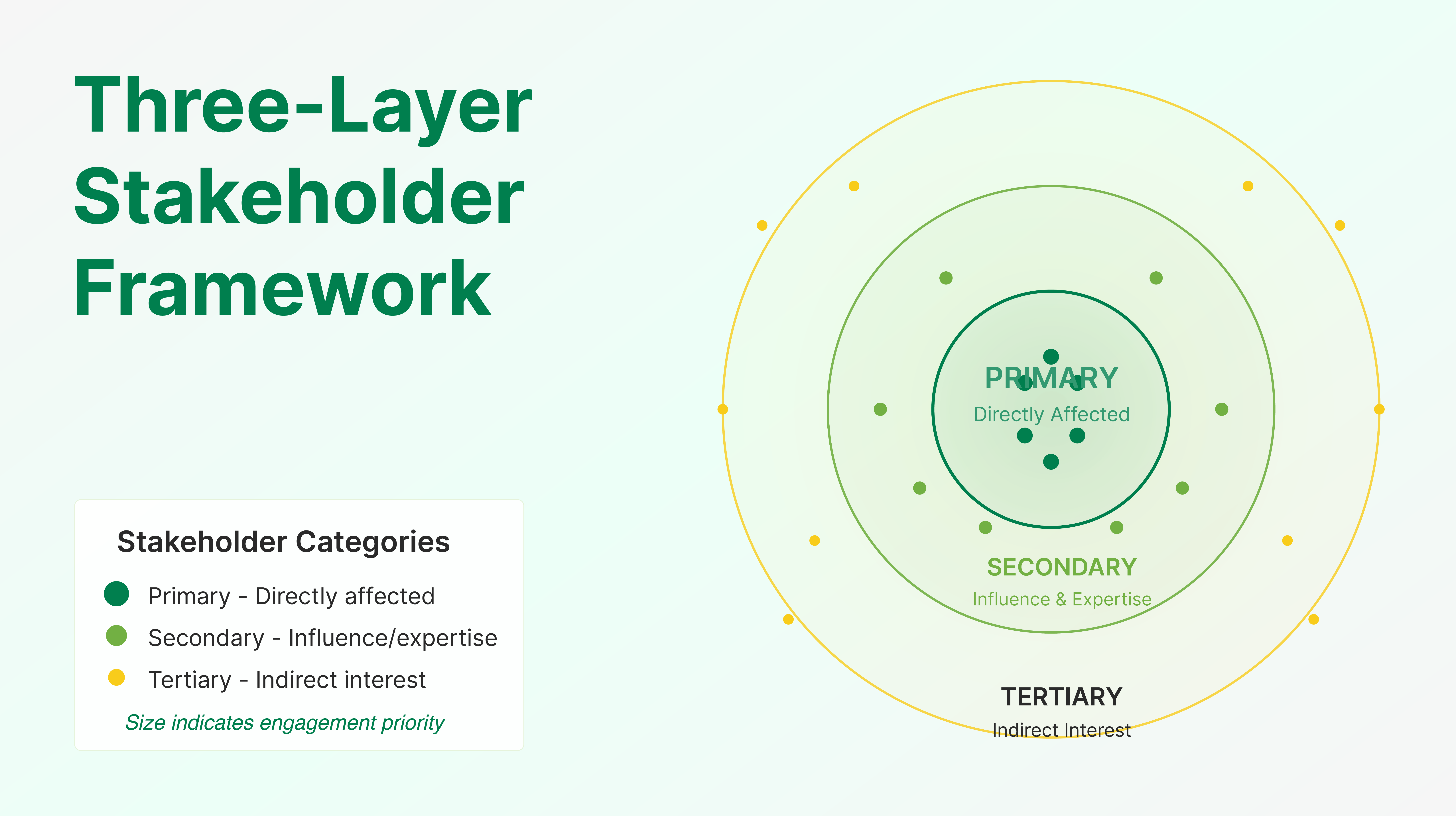
Most teams list stakeholders as a long column. That list is useful, but it does not show influence or risk. The three layer map fixes that.
I use this approach in my own project design work, and it helps teams stay aligned as the project evolves.
Here is a quick example from a youth skills program.
Core stakeholders:
- Youth participants
- Program facilitators
- Local school leaders
Active influencers:
- Parents and caregivers
- Local employers who offer placements
- Municipal education offices
Peripheral actors:
- Media partners
- National policy bodies
- Other nonprofits in the same region
The value of the map is in the gaps. If youth are core stakeholders but parents are only influencers, you might under invest in parent engagement. If the municipal office is an influencer, you may need early alignment to avoid delays later.
Add a quick risk layer. Mark who can stop or slow the project even if they are not delivering it. Those are your risk holders and they need attention early.
Try this today: write the three layers on a board, place every stakeholder, and then circle the three people or groups who can say "no." That circle is your first engagement priority.
In Lesson 1.2 🎥 Stakeholder Mapping, I walk through this inside the Setup toolkit. Watch the lesson video to learn more.
Mini checklist: who controls approval, who controls access, who influences reputation. Mark them with a star. If a group appears in two categories, that is a high influence stakeholder and needs early engagement. This prevents late surprises.
If you only have 20 minutes, map the core layer first, then add influencers. Even that partial map is better than a flat list.